
Journal
Notes from the studio
Short, direct notes on the decisions that shape a home gym, with the questions we are asked most.
Note
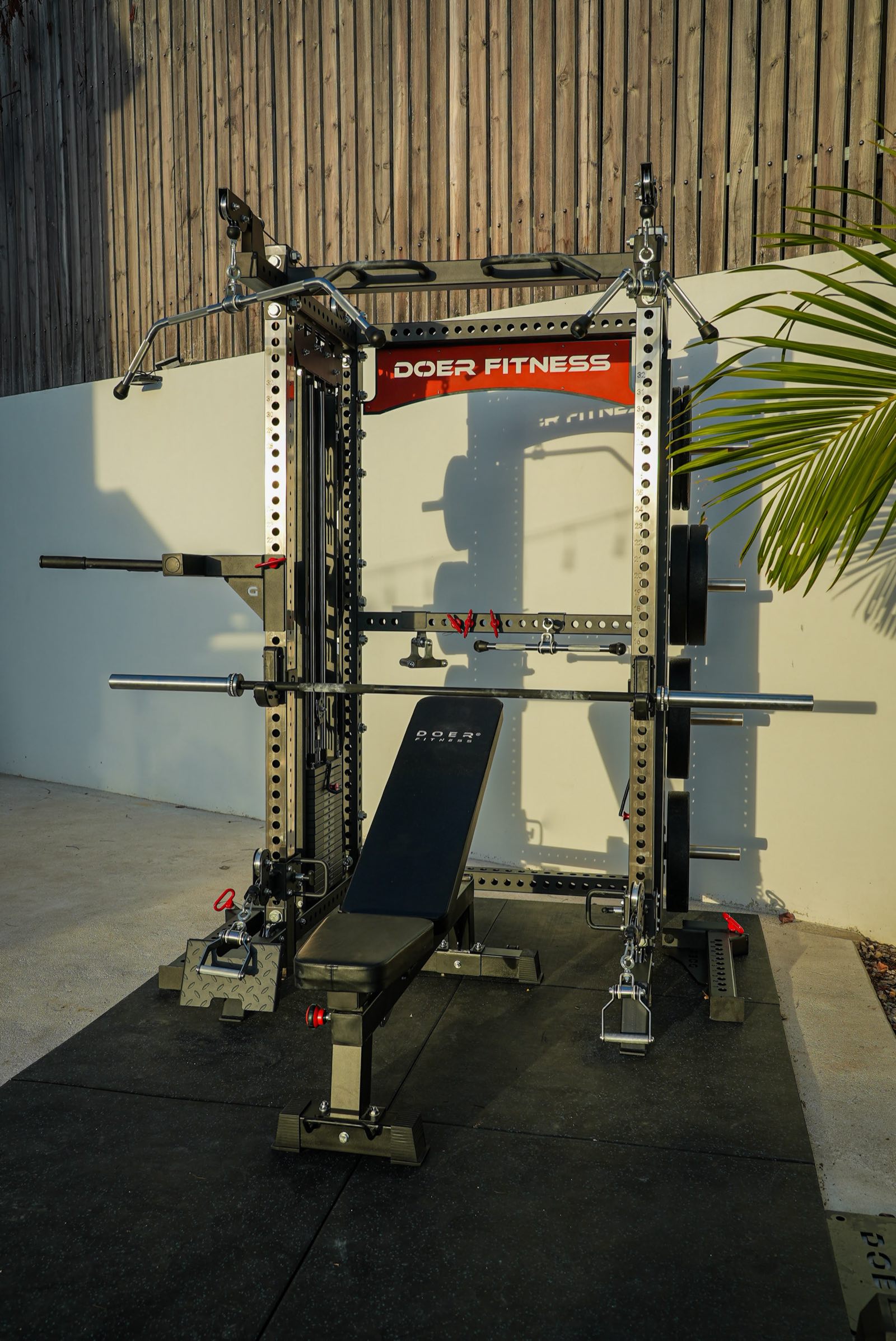
How much space a home gym really needs
Nine square metres, and what each extra metre buys.
Note
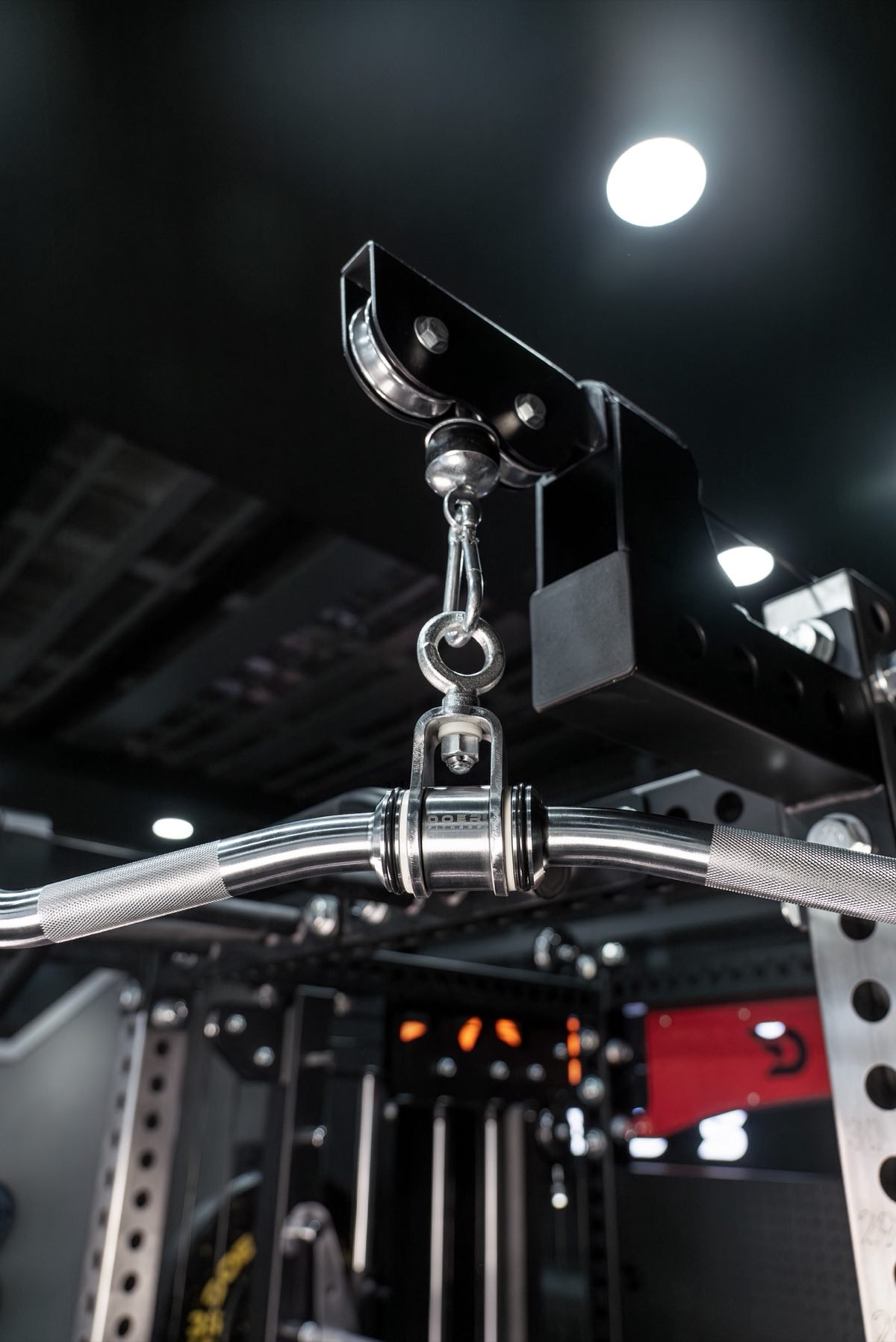
Ceiling height: the measurement people forget
The figure that decides which lifts the room allows.

Note
Flooring: 20 mm, 8 mm and what to avoid
The floor protects the slab, the equipment and the joints.
Frequently asked questions
How much space do I need for a home gym?
About 9 m² (a 3 × 3 m room) is the working minimum for a rack and an adjustable bench, with a ceiling of at least 2.5 m.
What ceiling height does a home gym need?
2.4 to 2.5 m is enough for squats, bench press and rows. Standing overhead press and full-range pull-ups need 2.7 to 3 m.
What flooring should go under a power rack?
High-density rubber tiles 20 mm thick with an interlocking system. They absorb impact and protect the slab.
Do rubber gym tiles need glue?
No. Interlocking tiles rest on a level surface without adhesive, so they can be relocated later.
Can I use foam or vinyl flooring for weights?
Not under free weights. Foam compresses and vinyl absorbs almost no impact. They suit stretching and floor work.
How wide must a room be for a barbell?
Allow about 3 m of clear width for any structure that holds an Olympic barbell.
Can a home gym go on an upper floor?
It can, but the structure must be checked by a qualified professional first. A rack such as the TOTUM weighs about 600 kg before plates are added.
What should I prepare before a private consultation?
The length, width and ceiling height of the room, photographs of it, what you want to train and the country where it is.
The studio
Every room starts with a conversation about the room.
Bring the measurements, the ceiling height and what you want to train. The Doer Fitness team turns them into a layout before a single piece of equipment is chosen.
Request a private consultation