
Flooring: 20 mm, 8 mm and what to avoid
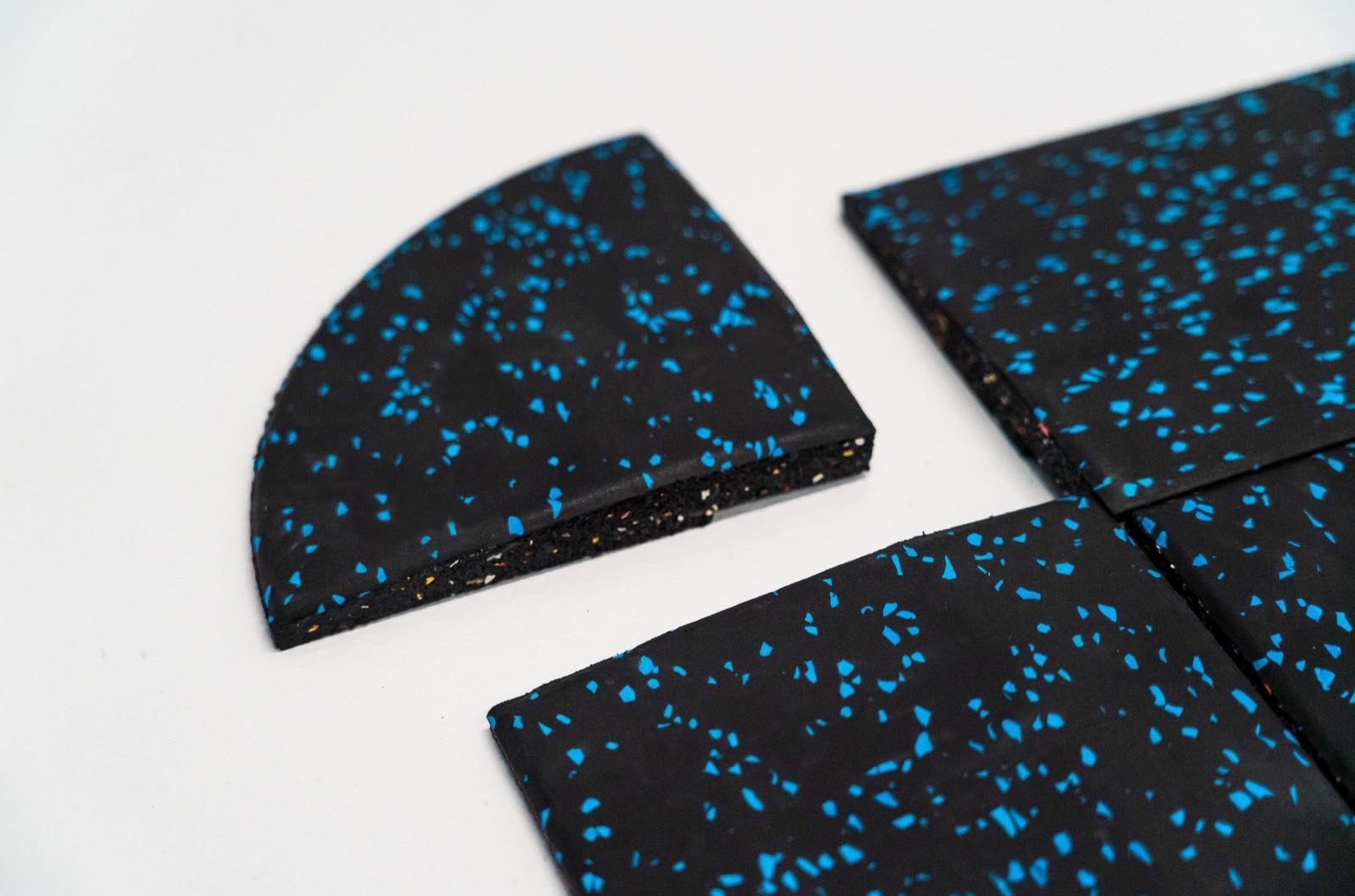
Under a rack, use high-density rubber tiles 20 mm thick with an interlocking system. For cardio, mobility and fixed machines, an 8 mm rubber roll is enough.
What the floor is for
It protects three things at once: the slab beneath, the bar and plates above, and the joints of the person training. Without it, every impact travels straight into the concrete.
Surface by surface
| Surface | Suited to | Limit |
|---|---|---|
| Rubber, 20 mm | Heavy lifting, barbell zones | Thicker and heavier to lay |
| Rubber, 8 mm | Cardio, mobility, fixed machines | Absorbs less impact |
| Foam | Stretching, floor work | Compresses under plates |
| Vinyl | Studios without free weights | Almost no impact absorption |
| Bare concrete | No free-weight zone | Damages equipment and slab |
Installation
Interlocking tiles are laid on a level surface without adhesive. Edge and corner pieces finish the perimeter so there is nothing to trip on, and the whole floor can be lifted and moved if the room is rearranged.